


Introduction: When Romance Meets the Cosmos
Few experiences rival the profound romance of sharing the night sky with someone special. A stargazing date offers something increasingly rare in our distracted world: genuine presence under infinite space, meaningful silence broken only by whispered observations, and connection through shared wonder at the universe's majesty. If you've been searching for "stargazing date" ideas, you're seeking to harness cosmic beauty for romantic purposes.
This comprehensive guide provides everything you need to plan perfect stargazing dates that create lasting memories and deepen genuine connection. From finding accessible stargazing locations to learning basic astronomy that enhances rather than overwhelms, we cover the practical guidance that transforms good intentions into magical nights under the stars.
Whether you're planning your first stargazing date or seeking to enhance established relationships through astronomical adventures, this guide provides the insights and strategies that help you create unforgettable experiences beneath the infinite canvas of the night sky.
Why Stargazing Creates Cosmic Romantic Connection
The Neuroscience of Astronomical Awe
Stargazing triggers profound neurological responses that directly enhance romantic bonding. Understanding these mechanisms helps you leverage cosmic observation for maximum relationship benefit.
When humans perceive vastness—infinite space, ancient light, incomprehensible scale—our emotional systems respond with awe. This awe response activates parts of our brain associated with social connection, generosity, and sense of self-transcendence. Interestingly, research demonstrates that awe experiences increase prosocial behavior and sense of connection to others present. A stargazing date essentially hijacks your neurological systems for bonding benefit.
The physical positioning during stargazing—lying side by side, facing upward—creates intimate configuration that seated face to face conversations rarely achieve. This parallel positioning allows comfortable eye contact when desired while permitting natural silence that conversation-focused dates struggle to achieve. Partners can point out observations, share discoveries, or simply exist together without constant verbal engagement.
Why Stargazing Outperforms Traditional Dating Activities
Compared to conventional date options, stargazing offers unique advantages that make it exceptionally effective for building genuine connection.
- Conversation Facilitation: The night sky provides endless conversational fuel through constellation stories, astronomical questions, and philosophical contemplation sparked by cosmic perspective.
- Device Detox: Phone screens disrupt night vision and break atmospheric immersion. Stargazing naturally creates device-free presence that's increasingly rare and valuable.
- Equalizing Effect: Under the infinite sky, human concerns become appropriately sized. Both partners share vulnerability against cosmic scale that makes relationship pressures feel manageable.
- Memory Creation: Unique stargazing experiences create distinctive memories that standard dinner-and-movie dates simply cannot match.
- Recurring Potential: Astronomy's infinite variety—different seasons, different events, different learning—creates relationship activity that never exhausts its potential.
Finding Perfect Stargazing Locations
Criteria for Ideal Romantic Stargazing Spots
The difference between frustrating and magical stargazing experiences often comes down to location selection. Understanding what makes sites ideal helps you find perfect spots regardless of where you live.
Dark Sky Access: Light pollution remains the greatest enemy of stargazing. The darkest skies offer views of Milky Way bands, thousands of stars, and faint celestial objects impossible to see in urban environments. Distance from city lights—typically 30+ miles for moderate darkness, 60+ miles for exceptional darkness—dramatically affects viewing quality.
Clear Horizon Views: Even excellent dark skies become less useful if surrounding terrain blocks lower portions of sky where planets and brighter stars appear. Elevated positions that offer panoramic views maximize visible sky and viewing opportunities.
Comfort and Safety: Beyond astronomical quality, practical factors determine whether locations work for romantic dates. Parking accessibility, ground surface comfort for lying down, protection from wind, absence of dangerous terrain features, and reasonable security all affect whether locations enable romantic focus rather than practical distraction.

Finding Locations Near You
Finding accessible dark sky locations requires knowing where to search and what resources to leverage.
International Dark Sky Association: The IDA certifies Dark Sky Parks, Reserves, and Communities around the world. Their website provides searchable database of officially recognized dark sky locations that guarantee exceptional viewing conditions.
State and National Parks: Many remote parks offer excellent dark skies combined with accessibility and safety. Popular dark sky parks include Joshua Tree, Big Bend, Cherry Springs State Park, and Great Basin. Check park websites for astronomy programs and ranger-led stargazing events.
Online Astronomy Communities: Local astronomy clubs and Reddit communities often share knowledge about lesser-known viewing spots. These resources provide location intel that official databases miss.
Google Maps Exploration: Satellite imagery helps identify isolated rural locations with clear sky potential. Look for agricultural areas, reservoir shores, and rural roadsides away from settlements.
Urban Stargazing Alternatives
True dark sky access isn't always possible. Urban stargazing can still create romantic experiences through different astronomical targets and adjusted expectations.
Bright Object Focus: Plan urban stargazing around visible planets, the Moon, bright star clusters, and satellite passes. These targets remain visible despite light pollution and provide structure for observation.
Planetarium Dates: When sky conditions disappoint, planetarium visits provide alternatives. Many planetariums offer evening shows, laser music experiences, and special events that create astronomical atmosphere.
Rooftop Romance: Urban rooftops with minimal nearby lighting provide better views than street level. Bring blankets and patience, focus on brighter celestial objects, and embrace the urban stargazing limitations as part of the romantic narrative.
Essential Planning for Stargazing Success
Timing and Weather Strategy
Successful stargazing requires managing multiple timing factors that affect both astronomical visibility and romantic comfort.
Lunar Calendar: The Moon's phase dramatically affects sky darkness. New moon periods—approximately two weeks monthly when Moon isn't visible—provide darkest skies for Milky Way and faint object viewing. Full moons provide excellent lunar observation but wash out dimmer sky objects. Plan stargazing around lunar phase based on your astronomical priorities.
Seasonal Considerations: Different constellations and objects appear in different seasons. Summer offers Milky Way center and Sagittarius region; winter provides Orion and brilliant star clusters; spring and fall offer excellent galaxy viewing. Plan timing based on desired astronomical targets.
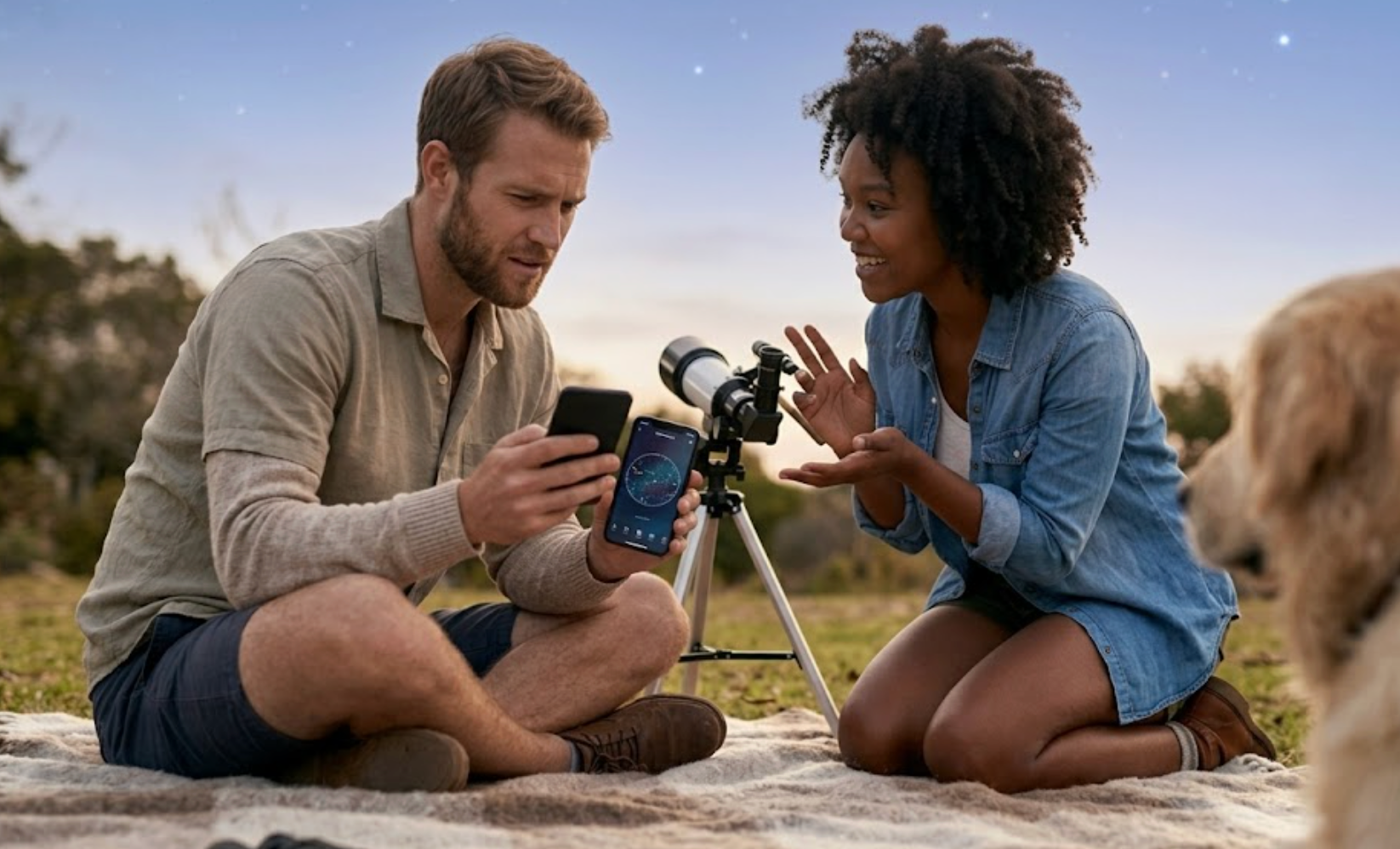
Weather Coordination: Cloud cover ruins even perfect plans. Monitor weather forecasts obsessively in final days before planned dates. Maintain backup dates and indoor alternatives. Consider partial cloud cover as potentially enhancing rather than ruining—atmospheric effects can create beautiful sky phenomena while clouds part for occasional viewing.
Essential Gear and Supplies
Comfort and preparation determine whether stargazing experiences become magical memories or miserable experiences. Pack thoughtfully to ensure romance isn't undermined by practical discomfort.
Seating and Warmth:
- Blankets—multiple layers for temperature changes
- Foam pads or yoga mats for ground insulation
- Warm layers including gloves and hats
- Hand warmers for cold nights
- Thermos with hot beverages
Observation Equipment:
- Binoculars (7x50 or 10x50 for astronomy)
- Red flashlight for navigation without disrupting night vision
- Star charts or planispheres
- Astronomy apps on phones (with red-light mode)
Romantic Enhancements:
- Picnic supplies for extended evening dates
- Music player with appropriate romantic playlists
- Camera with tripod for astrophotography memories
- Comfort items that extend outdoor comfort
Basic Astronomy for Romantic Stargazing
Easy Constellations for Beginner Stargazers
Knowing a few constellations transforms stargazing from passive observation into active discovery. These celestial markers provide structure for navigation and conversation while creating shared learning experiences.
The Big Dipper (Ursa Major): Perhaps the most recognizable asterism, the Big Dipper's seven bright stars form obvious pattern visible from most locations. Use it to find Polaris (the North Star) by following the pointer stars at the dipper's bowl. The Big Dipper circumnavigates Polaris throughout the night, providing visible evidence of Earth's rotation.
Orion (The Hunter): Visible primarily in winter evenings, Orion's distinctive three-star belt makes identification easy. The surrounding rectangle with shoulders and knees creates obvious hunter figure. The Orion Nebula—visible as fuzzy patch below the belt—provides deep sky object accessible with binoculars.
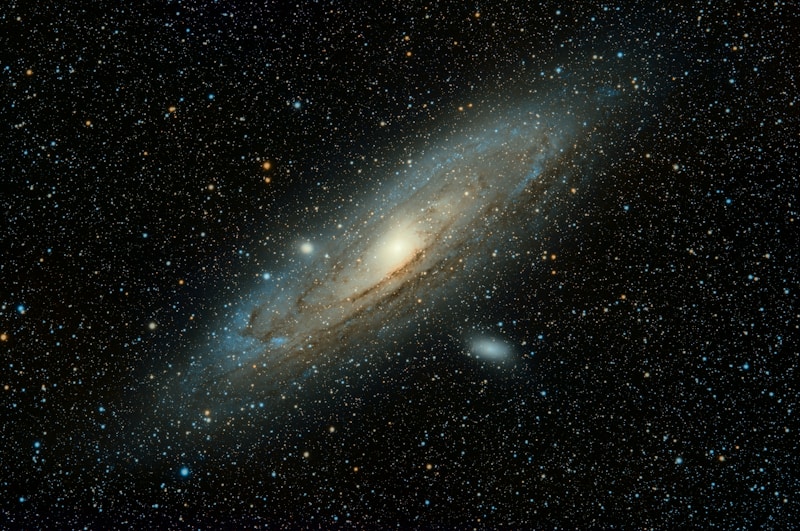
Cassiopeia (The Queen): This W-shaped constellation circumnavigates the north celestial pole opposite the Big Dipper. Its distinctive shape makes it immediately recognizable and useful for navigation to other constellations.
Scorpius (The Scorpion): Summer's most recognizable constellation features bright red Antares at its heart with curved tail trailing behind. Look for it rising in the south during summer evenings.
Planets and Special Events
Planetary observation adds excitement and conversation opportunities to stargazing dates. Bright planets outshine most stars and attract immediate attention.
Visible Planets: Venus often appears as brilliant "Evening Star" shortly after sunset. Jupiter and Saturn show as bright points that stand out from stars through their steadier light. Mars's reddish color makes it identifiable. Visible planets change monthly as Earth and other planets orbit at different speeds.
Meteor Showers: Annual meteor showers—Persieds in August, Leonids in November, Geminids in December—provide spectacular events worth planning dates around. Peak nights offer dozens of visible meteors per hour. Check peak dates and plan accordingly.
Satellite Passes: The International Space Station and other bright satellites regularly pass overhead, appearing as steadily moving bright points crossing the sky. Apps can predict passes for specific locations, adding spontaneous excitement to stargazing evenings.
Romantic Stargazing Activities for Couples
For the Astronomically Curious
If learning excites you, structure stargazing as educational adventure that creates shared knowledge and ongoing conversation topics.
Constellation Learning: Challenge each other to find newly learned constellations. Create friendly competition about who can locate objects first. Use this competitive learning to build shared vocabulary and reference points for future conversations.
Binocular Exploration: Bring binoculars and systematically explore star clusters, nebulae, and the Moon's surface together. The shared discovery of hidden celestial beauty creates bonding through joint exploration.
Astrophotography Attempts: Even smartphone cameras can capture recognizable photos of the Moon and bright planets with steady hands. Try photographing celestial objects together, creating artifacts of your shared experience.
For the Philosophically Inclined
If deep conversation appeals more than technical detail, use the cosmos as springboard for meaningful exchange.
Existential Conversation: Cosmic perspective invites contemplation of existence, consciousness, and meaning. Use the night sky to explore questions too large for ordinary conversation: "What would you want humanity to know if we contacted extraterrestrial life?" "How does understanding astronomical scale change how you prioritize your life?"
Personal Mythology: Share what you imagined space contained as a child. Discuss how your understanding of the universe has changed your sense of self and meaning. These vulnerable revelations create intimacy through shared philosophical exploration.
For the Creatively Inspired
If creative expression enhances your romance, incorporate artistic activities into astronomical observation.
Constellation Naming: Create your own constellations using the patterns you see. Develop mythology for your invented star figures. These shared creative activities produce relationship mythology unique to your partnership.
Night Sky Poetry: Challenge each other to write poems inspired by the astronomical beauty surrounding you. Read your creations aloud under the stars. These creative expressions become treasured relationship artifacts.
Soundtrack Creation: Build playlists that capture astronomical atmosphere. Listen together while observing. These musical pairings create sensory experiences that recall stargazing memories whenever you hear the music again.
Finding Your Cosmic Match on MixerDates
The magic of stargazing dates reaches full potential with partners who appreciate cosmic wonder and philosophical depth. MixerDates helps you connect with individuals who understand that genuine romance requires more than surface attraction—it demands shared capacity for awe, curiosity, and meaningful connection.
MixerDates' personality-first matching approach aligns perfectly with stargazing date philosophy. Both activities prioritize authenticity over performance, depth over superficiality, and genuine presence over distracted engagement. When you connect with stargazing enthusiasts on MixerDates, you've already established foundation for astronomical adventure.
The platform's diverse community includes individuals from all backgrounds who recognize that lasting relationships need partners whose souls resonate together. Whether you're seeking someone who shares your astronomy passion or someone willing to explore cosmic wonder with you, MixerDates connects you with compatible others.
Ready to find someone special for your next cosmic adventure?
Celestial Love Stories from Real Couples
Elena and James: Finding Meaning Through Cosmic Perspective
Elena, a 33-year-old hospice counselor, had spent years helping others process mortality when she realized she wasn't fully living her own life. When she matched with James, a 35-year-old software developer, on MixerDates, their first conversations revealed shared interest in cosmic perspective as antidote to daily stress.
"Our first stargazing date was spontaneous," Elena remembers. “Clear night, no clouds, and James suggested we drive to the hills outside the city. We brought blankets, wine, and absolutely no agenda. Lying there looking at infinite stars, I felt more present and alive than I had in years. And James was just perfect—pointing out constellations, sharing his childhood astronomy memories, asking big questions about meaning and purpose.”
Their relationship developed under the stars. Monthly stargazing dates became ritual, each visit building on previous astronomical learning and philosophical exploration. "We joke that we fell in love literally looking at the universe," James laughs. "But it's true. Under those stars, I saw Elena's soul more clearly than I ever had across restaurant tables or coffee cups. And she saw mine." They married under a canopy of stars with ceremony designed around astronomical symbolism.
Min-Ji and Alejandro: Building Culture Through Cosmos
Min-Ji, a 28-year-old astrophysicist, had resigned herself to dating partners who didn't understand her passion for the stars. When Alejandro, a 31-year-old musician, reached out on MixerDates mentioning his love of night sky photography, she was intrigued.
"Alejandro wasn't an astronomer, but he had this genuine fascination with light from distant objects," Min-Ji explains. "Our first stargazing date, he kept asking questions—patient questions that showed real curiosity rather than polite tolerance of my professional passion. He wanted to understand why certain nebulae glowed different colors, how we knew distances of unreachable objects, what it meant that we're literally made of star material."
5 Mistakes That Ruin Stargazing Dates
Mistake #1: Underestimating Cold Exposure
Even warm summer nights become cold after midnight, and cooler seasons can become dangerous without adequate preparation. New stargazers consistently underestimate temperature, arriving underdressed and spending dates distracted by cold rather than present with their partner. Layer aggressively, bring more blankets than seems necessary, and prioritize warmth over looking good.
Mistake #2: Checking Phones Constantly
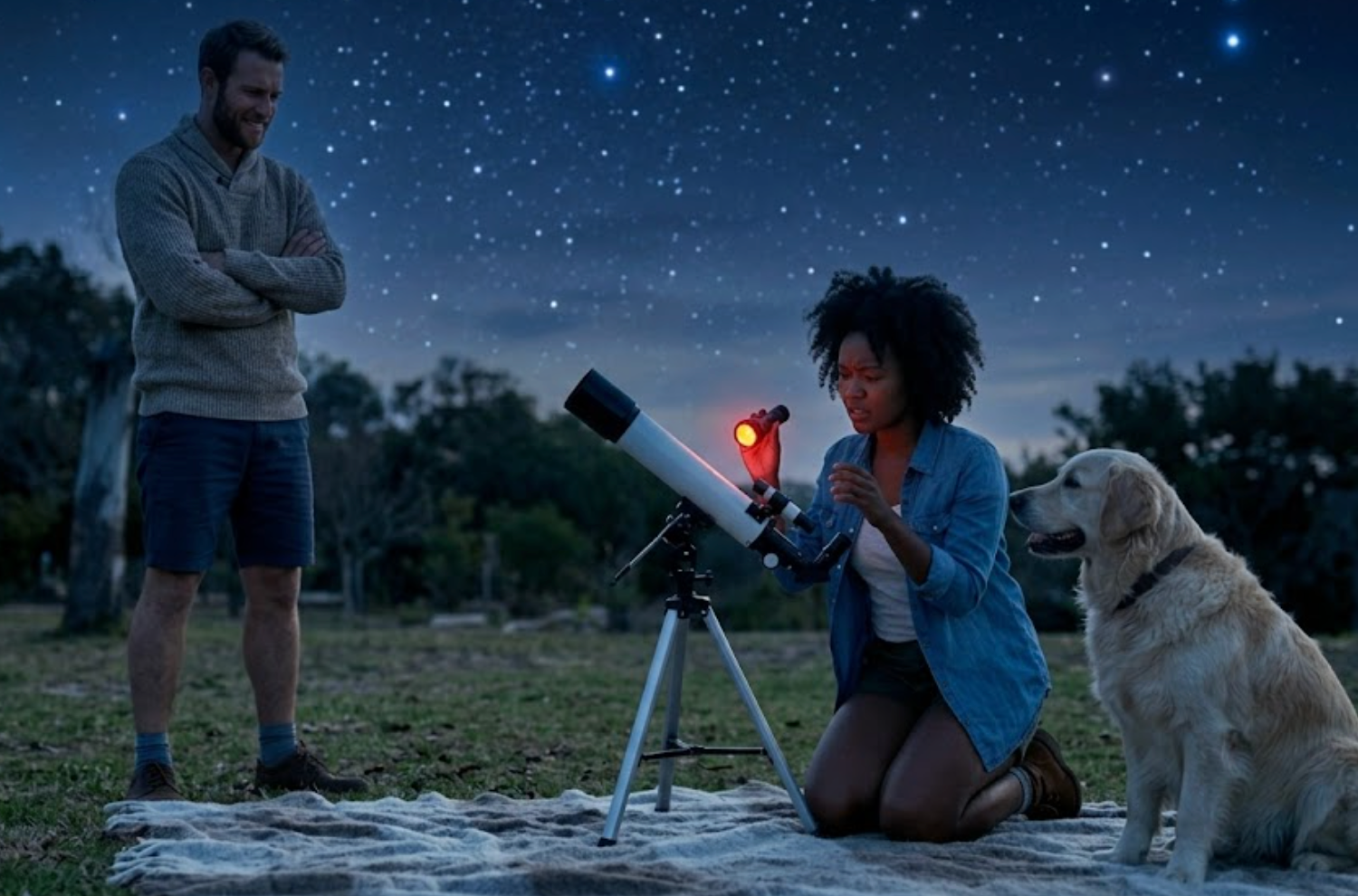
Phone screens destroy night vision in seconds, requiring minutes of readaptation. Frequent phone checking disrupts both your own astronomical adaptation and your partner's experience. Establish clear agreements about phone use before stargazing begins. Use red-light mode exclusively when checking phones is absolutely necessary.
Mistake #3: Forcing Learning Over Enjoyment
Astronomy enthusiasm sometimes overwhelms stargazing romance through excessive technical teaching. If your partner isn't naturally interested in orbital mechanics or stellar classification, recognize that stargazing's value lies in shared wonder, not astronomical education. Match teaching to partner interest level, and prioritize atmospheric enjoyment over demonstrating your knowledge.
Mistake #4: Choosing Inaccessible Locations
Dark sky quality matters less than comfort and safety for most romantic purposes. Driving two hours to darkest possible location creates logistics that undermine romance. Choose accessible locations that provide adequate darkness while minimizing travel stress, equipment burden, and logistical complexity.
Mistake #5: No Exit Strategy for Weather
Clouds don't always cooperate with perfect plans. Entering stargazing dates without weather contingencies sets up frustration when conditions disappoint. Have backup plans—planetarium visits, astrophotography from home, romantic evening indoors—that preserve romance regardless of sky conditions.
Frequently Asked Questions About Stargazing Dates
Do I need expensive equipment for stargazing dates?
Not at all. While binoculars enhance deep sky viewing and telescopes reveal planetary detail, neither is necessary for romantic stargazing. The naked eye views thousands of stars, recognizes constellations, and tracks celestial movements beautifully. Start without equipment; add based on genuine interest rather than assuming you need it.
What's the best time of year for stargazing dates?
Every season offers unique astronomical treasures. Summer provides Milky Way viewing; winter offers brilliant stars and easy constellation identification; spring and fall feature galaxy season and comfortable temperatures. Choose timing based on what you most want to see rather than assuming any season is better than others.
How do I find dark sky locations near me?
Check the International Dark Sky Association's website for certified dark sky places. Use light pollution maps available online. Ask local astronomy clubs for recommendations. Explore state and national parks within driving distance. Multiple resources exist—finding perfect spots just requires knowing where to look.
What if my date isn't interested in astronomy?
Stargazing's romantic value comes from shared wonder, not astronomical expertise. Focus on atmosphere, conversation, and cosmic perspective rather than technical detail. If astronomy genuinely doesn't interest your partner, consider whether other romantic activities might serve your relationship better than forcing astronomical enthusiasm.
How long should stargazing dates last?
Stargazing dates can range from quick hour-long Moon viewing sessions to all-night adventures. For most romantic purposes, 3-5 hours provides sufficient time for arrival, settling, observation, meaningful conversation, and departure without exhaustion. Adjust based on temperature, astronomical events, and partner energy levels.
Looking for someone special to share cosmic adventures with?